BLOG
The Flourish in the Foreign blog is a reading room and resource archive. Books, essays, guides, and field notes on Black women's global migration, wellness, and the life well-lived abroad.

Nurturing a Sense of Belonging: Key to Children's Well-Being Abroad
Belonging is a fundamental need for individuals of all ages. A strong sense of belonging serves as the foundation for positive adjustment, self-identity, and trust, particularly in children.

A Sense of Belonging
Belonging is a fundamental need for individuals of all ages. A strong sense of belonging serves as the foundation for positive adjustment, self-identity, and trust, particularly in children. This aspect is equally crucial within the school environment, as fostering connectedness during elementary years can significantly reduce the likelihood of engaging in risky behaviors later in life.
In the early stages of development, young children form their strongest bond with their parents or primary caregivers. Therefore, it is vital to extend this connection to the school setting as early as possible. Building a close bond with the classroom teacher or another trusted adult figure holds great significance. This connection can be fostered through personal interactions and is further enhanced by establishing a positive relationship with the child's parents or caregiver. It is important to recognize that children often take cues from their parents in shaping their own relationships, so a trusting bond between the teacher and parents can positively influence the child's sense of security and connection. This is especially important when transitioning to a new school in a different unfamiliar. country.
Principals play a crucial role in facilitating a sense of connection within the school community. They can achieve this by personally meeting each student and their parents at the beginning of the school year, organizing monthly parent chats or coffee events, including personalized messages in weekly newsletters, encouraging parental involvement through volunteering opportunities, and providing regular times for parents to meet with them throughout the day. By prioritizing and actively promoting a culture of belonging and connection, schools can create an environment where students, parents, and educators feel valued, supported, and engaged in a collaborative educational journey.

Fostering Resilience for Change
Establishing routines is essential for children's development. We often teach children about routines through morning activities or transitions from school to home. Equally important, however, is nurturing their ability to adapt to change. The skill of adapting to change begins to develop at a young age and is vital throughout life. It's crucial to recognize that some children may react negatively to change, especially when experiencing emotional stress. In such cases, they may require support in adjusting to even small changes at school, such as a substitute teacher or a new school environment. This need for assistance becomes even more pronounced when preparing for significant changes like moving to a different country. During major transitions, children will benefit from thorough preparation and ongoing assistance. Maintaining regular communication with the new school is also crucial, as it allows them to be aware of any challenges the child may be facing at home, enabling them to provide appropriate support to ensure optimal learning experiences at school.
Furthermore, minimizing anxiety associated with change can be achieved by providing children with advance warning and involving them in the process. Allowing them to participate in planning the move, packing their belongings, or decorating their new room can empower them and ease the transition. It is also valuable to develop coping strategies together with children. Identifying aspects that remain unchanged and familiar can provide a sense of stability. Additionally, offering positive feedback when children demonstrate progress, such as independently completing homework, tidying their room, or making new friends, helps them maintain a sense of control and stability.
By recognizing the importance of routine while also nurturing adaptability, supporting children through changes both big and small, and fostering open communication and involvement, we can help children navigate transitions with confidence and resilience, ultimately promoting their well-being and growth.

Changes to Look Out For
Symptoms of mental health problems can manifest in various ways, including changes in habits, withdrawal, decreased social and academic functioning, unpredictable behavior, and physical complaints. It is important to be vigilant and seek the assistance of a mental health professional if any of the following conditions arise:
Are new or change in intensity, frequency, or presentation
Do not improve with combined parental and classroom intervention
Interfere with the child's academic, social, and emotional progress
Disrupt the classroom consistently
Are beyond the student's control
Present a danger to themselves or others
Recognizing these indicators and taking appropriate action can help ensure that children receive the necessary support and interventions to address their mental health needs effectively. Seeking professional guidance in these circumstances is crucial to promote the well-being and successful transition of the child to their new country.
About the Author
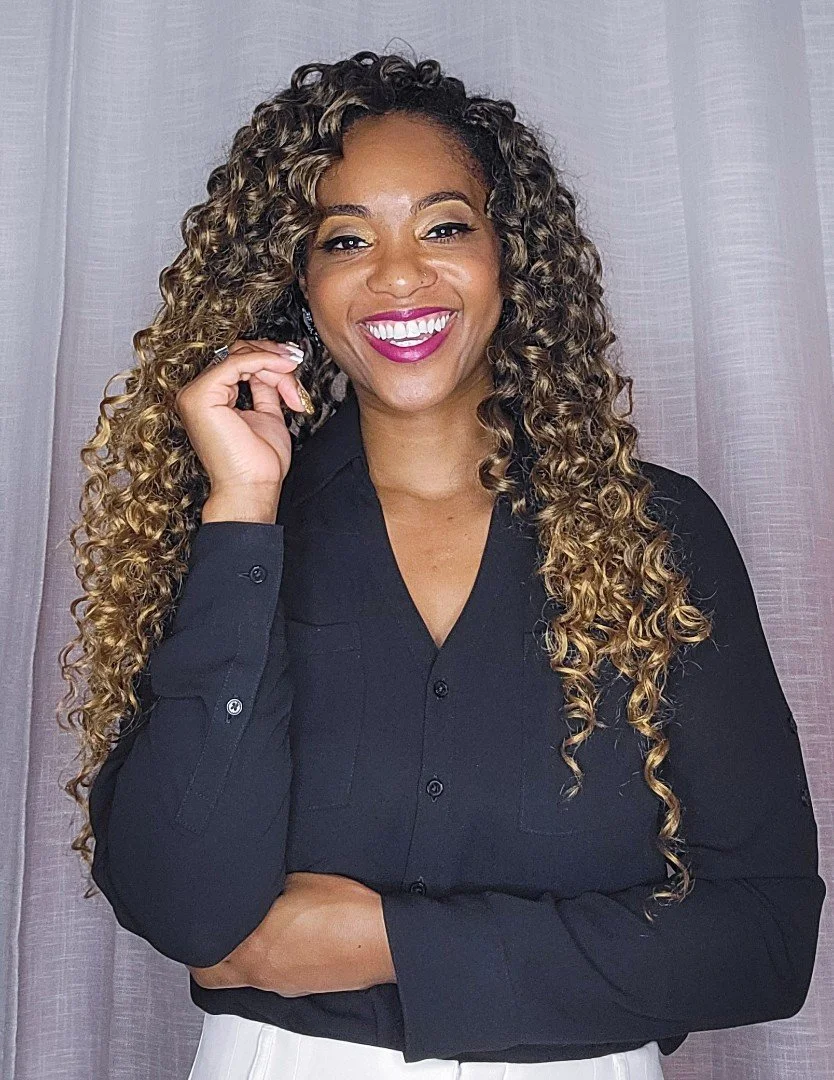
Dr. Casey Dupart is an accomplished K-12 administrator, school psychologist, certified clinical trauma professional, and board certified behavior analyst, with a versatile career spanning various educational settings. Throughout her journey as an Air Force spouse, she has passionately supported students and clients academically, socially, and emotionally in diverse locations, including Italy, Maryland, Texas, North Carolina, Utah, and Hawai'i.
Her expertise in academic administration, student achievement and success, climate assessment, and cultural responsiveness has enabled her to develop and deliver numerous professional development programs focused on training and development, behavior intervention, and trauma-informed practices.
Driven by her passion for making a positive impact, Casey founded Embracing Resilience Consulting, providing invaluable support in applied behavior analysis implementation, mental health and educational consultation, leadership development, professional learning, and trauma-informed practices.

Beyond the Shores: A History of African Americans Abroad
Dive into the compelling narratives of African Americans journeying beyond the U.S. in Beyond the Shores. Dr. Tamara J. Walker masterfully intertwines tales of migration, searching for belonging, and seeking a deeper understanding of home.

By. Tamara J. Walker
Dive into the compelling narratives of African Americans journeying beyond the U.S. in Beyond the Shores. Dr. Tamara J. Walker masterfully intertwines tales of migration, searching for belonging, and seeking a deeper understanding of home. From the bustling streets of Paris to the hidden corners of Kabondo, Kenya, uncover the reasons they left, the challenges they faced, and the profound impact of their travels. Beyond the Shores isn’t just a historical account, but a vivid reflection on identity and belonging in a vast world.
By purchasing through our Bookshop.org link, you champion local independent bookstores and ensure the vibrancy of community hubs. Embrace this enriching journey with Flourish in the Foreign

In Every Mirror She’s Black
Discover the interconnected stories of three Black women navigating life, identity, and complex relationships in Stockholm in In Every Mirror She's Black.
By: Lola Akinmade Åkerström

Discover the interconnected stories of three Black women navigating life, identity, and complex relationships in Stockholm in In Every Mirror She's Black. Kemi, a marketing pro, Brittany-Rae, an ex-model, and Muna, a resilient refugee, all cross paths with an influential white figure, Jonny von Lundin. Their journeys shed light on the challenges Black women face in a predominantly white society, tackling vital themes of racism, classism, and the search for belonging. This gripping contemporary tale resonates with depth and timely insight.
By purchasing through our Bookshop.org link, you bolster independent bookstores, embracing the ethos of Flourish in the Foreign.
Listen to the Flourish in the Foreign interview with Lola
Listen to the author chat with Lola about In Every Mirror She’s Black

Traveling While Black: Essays Inspired by a Life on the Move
Embark on a thought-provoking journey with Nanjala Nyabola in her collection of essays that delve into the experiences of people of colour navigating a world not always designed for them.
By: Nanjala Nyabola

Embark on a thought-provoking journey with Nanjala Nyabola in her collection of essays that delve into the experiences of people of colour navigating a world not always designed for them. From Nepal's mountains to the bustling streets of Nairobi, Nyabola challenges biases, highlights the joys and struggles of diverse holidays, and examines the deep-rooted legacies of colonialism. In a world increasingly wary of movement, Nyabola's insights are both refreshing and essential. Purchase through our Bookshop.org link with Flourish in the Foreign to see the world anew through Nyabola's keen eyes.

Traveling While Black and Lesbian: Twbl
Through the lens of Khanyisa, a queer black woman, traverse from her roots in post-apartheid rural South Africa, grappling with identity, faith, and adversities, to transformative moments across the globe.
By: Khanyisa Mnyaka

Embark on a poignant journey with 'Traveling While Black And Lesbian'. Through the lens of Khanyisa, a queer black woman, traverse from her roots in post-apartheid rural South Africa, grappling with identity, faith, and adversities, to transformative moments across the globe. Witness her embrace authenticity amidst challenges in diverse locales like South Korea, Malaysia, and Guatemala. Dive deep into her heartfelt relationships, triumphs, and rediscoveries. This memoir is not just a journey across places, but a powerful reflection on self-acceptance and human connection. Ignite your spirit and support Flourish in the Foreign by procuring your copy through our Bookshop.org link.

Girl Uprooted: A Memoir
Lena Lee's life was a whirlwind of constant change. Daughter of a diplomat, she shifted between continents and cultures, always adapting but never truly belonging.
By: Lena Lee

Lena Lee's life was a whirlwind of constant change. Daughter of a diplomat, she shifted between continents and cultures, always adapting but never truly belonging. Despite her academic successes, internally, Lena grappled with her identity, leading her into a turbulent period marked by mental struggles. 'Girl Uprooted' delves into her journey of self-discovery, highlighting the challenges of balancing diverse cultural expectations and the quest for self amidst it all. A candid tale of finding one's place in a fragmented world.

Third Culture Kids 3rd Edition: Growing Up Among Worlds
Addressing the nuances of today's TCKs, they delve into the effects of technology, increased cultural diversity, and changing societal norms.
By: Ruth E Van Reken, Michael V. Pollock & David C Pollock

In the updated 3rd edition of this influential classic on Third Culture Kids (TCKs), Ruth E. Van Reken and Michael V. Pollock provide fresh insights for a new generation. Addressing the nuances of today's TCKs, they delve into the effects of technology, increased cultural diversity, and changing societal norms. This edition introduces new models for understanding cultural identity and personal development. Tailored advice is offered for TCKs navigating various life facets, from work to personal relationships. Notable additions include a revamped section for easy navigation and enhanced tools for educators. It's an essential guide for TCKs, their families, and professionals supporting them.

Welcome Home: An African Jamaican living in Ghana
One of my Ghanaian colleagues said, “But you are not African.” I said, “If I am not African, then what am I?” He said, “Jamaican” feebly.
By: Dr. Rachel V. Brown

All my life I’ve had to fight…
I sat with some co-workers and professed my deep love for Africa. I told them how glad I was to finally be home. One of my Ghanaian colleagues said, “But you are not African.” I said, “If I am not African, then what am I?” He said, “Jamaican” feebly, sensing my pain. Then I snapped, “Look at my skin, my hair, my nose, my lips, my hips; there is no denying that I am African. I am Jamaican but I am also African. I may not have been ‘born in Africa but Africa was born in me’”. He laughed and apologized. I know he may have forgotten by now, but I will never forget. Just like how I will never forget all of the affirmations I have received from my people that I look like them, cook like them, and am one of them. Just like I will never forget the peace I finally feel because I am finally back home, where I belong.
7 months ago, I made the biggest move of my life and I moved home; not home as in where I was born or grew up or where my parents are, or the past (although I suppose in some way it is the past that’s past the past), but home as in my present and future.
I was born in Kingston, Jamaica, left at 16 on a scholarship to a school in the US, and since then I have lived in a bunch of countries and seen a good chunk of the world. My whole life, I’ve been searching for home. I’ve waited patiently for a place that would not be temporary; a place I could grow some roots and where better to put down roots than the place of my roots which is where I am now: Ghana. I am home.

I fell in love with this country long before I came here. I knew this place intimately before I set foot in this space. And way before I decided to visit or move, way before any planes landed, I was present here and I knew I belonged. Those who know me well were not surprised when I told them that my new home would be Accra.
My connection to this land is other-worldly. I get flashbacks to places I’ve never been to in this lifetime. Everything feels familiar. And it isn’t because it looks and feels ridiculously a lot like Jamaica (which is another blog post all together), but because I’m sure I’ve been here before somehow, perhaps while I was stored in the hearts and minds of my ancestors who were here, or perhaps, in a past life. This was and is home.
When I got to the airport and they were checking my passport, they asked what the purpose of the trip was and I proudly said, “I’m moving here.” They responded with what I’ve longed to hear, “Welcome home.” And while part me wondered if they say that to all the Black people coming back or really knew that this experience was special for me and that I belonged here, I chose to just believe what I wanted to and go with them acknowledging my powerful ancestral roots within and truly being happy that I had returned to them.
I understand that our return has had pros and cons in every single industry and aspect of society. While diasporans are spending a lot and supporting local businesses, a lot of prices have been raised because they can afford to pay more. Even in the housing market, the prices have inflated beyond anything affordable for the majority of the population and are now comparable to or higher than rent in the US and Europe, and exponentially higher than other countries on the continent. While it has been great that Ghana has gotten so much positive attention, the increase in people here has led to an increase in things like traffic (which is crazy here) and overall crowding in the city. Many roads have been paved and buildings have been created or renovated to appeal to “outsiders”. Most of that construction and renovation has taken place in cities like Accra and Kumasi while other parts of the country have been neglected. Families who have lived here for generations are having to move out of the city because they can’t afford to stay here. With these in addition to numerous other examples of the dichotomy created, I can understand why there are different reactions to me being here; however, that doesn’t change the fact that sometimes the negative or skeptical reactions hurt.
What I’ve noticed is that many of the people here know how much returning means to us. I mean there was a whole Year of Return and subsequently the Beyond the Return movement has taken root in Ghana with many other countries adopting their own version. However, there seems to be different feelings towards us and this concept of returning. Sometimes I feel like Ghanaians born and living here are truly happy that I am home, and other times I feel like the “other” and as if this whole return is a joke to them. As someone who was expecting and hoping to be embraced like a child who had been kidnapped and by some miracle survived and made her way back home, and as someone who has been constantly aware of that kidnapping and intentionally and actively rejected the Stockholm syndrome, it is painful when I am treated as if or perceived as an outsider in my own home.

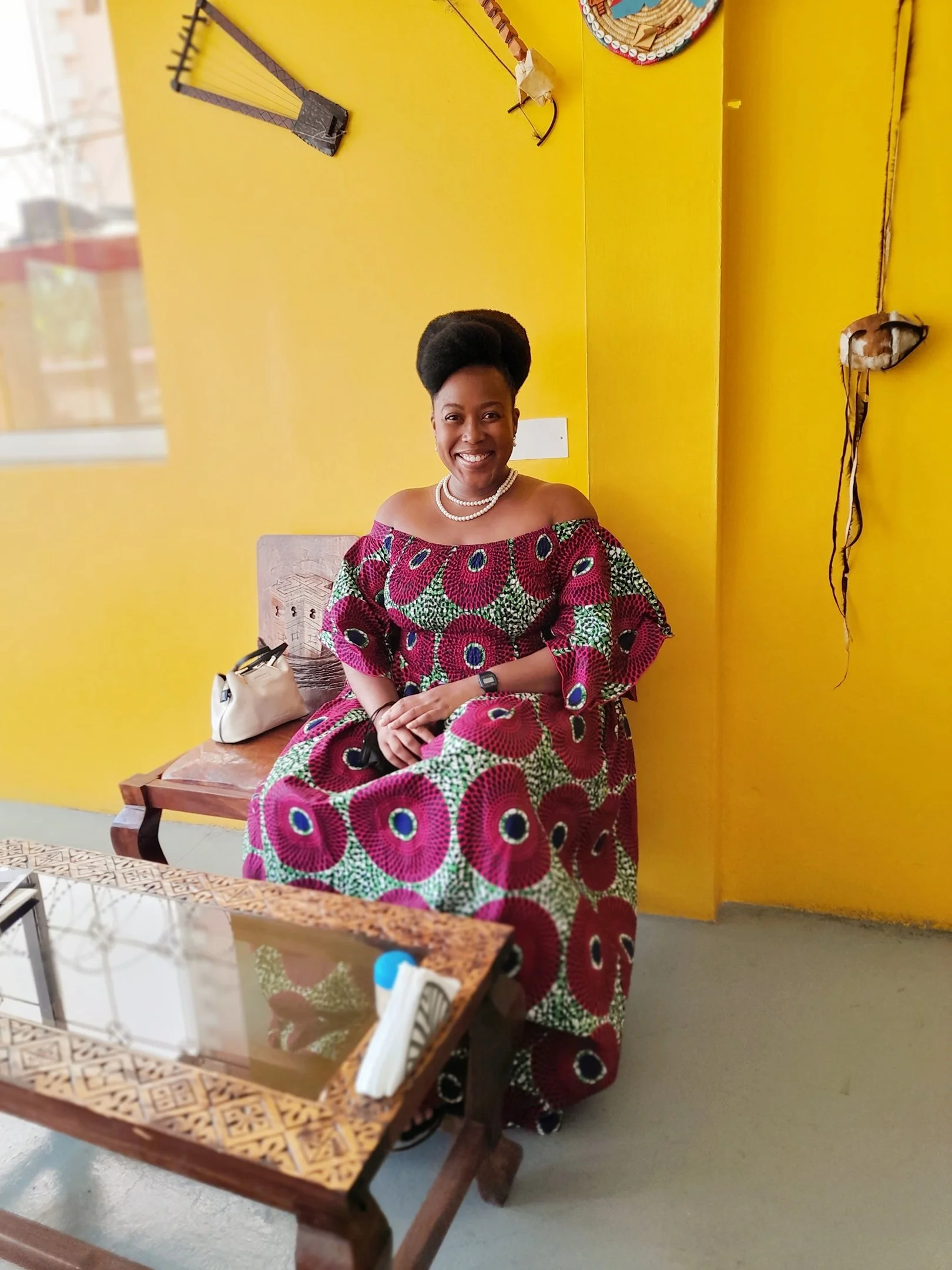
Because of that I have tried desperately to become more like a chameleon but how can one blend in when they are clearly and proudly different? How can one blend in when you are born to stand out? Ironically, many of the things that I thought would help me blend have been the things that indicate that I was born elsewhere. When I lived in predominantly white countries, getting any form of African food was a treat and I would try to have it as much as I could afford to (which was rarely). Now, I cannot eat banku or fufu or jollof more than maybe once every few weeks because I’ve had and seen them so often. I went to Kumasi and had fufu with light soup for 5 days straight and I have no desire to see fufu ever again. Some people seem to never tire of it. I realize I only like to explore and eat different foods from different places sparingly. I go out and I dance to the music without thinking; music is a soul connection. And while people are sometimes shocked that I know the latest Afrobeats moves, they also see that I move differently. Just last week I went to a dancehall party and someone came up to me and said “I can tell you’re Jamaican by the way you move.” That just made me proud because I love Jamaica and that I’m from there. (name a Jamaican that is not proud to be Jamaican…I’ll wait) Another surprise has been the reception of my clothing. When I step out in my African prints looking like the empress I am, the first question people ask is “Where are you from?” Apparently, my dresses are a giveaway which is ironic because I’ve worn them my whole life with pride as a way of outwardly showing that I was not only African genetically but celebrated that Africanness by choice. Here in Africa, they indicate that I am “not African” or from somewhere else. *face palm* African print is worn but not worn most days by most people and certainly not in the styles I wear it. I will wear my African empress dresses proudly regardless because they are beautiful and African. Also, I’m just not a big fan of jeans….

I’m still pretty new to my home and although it has always been a part of me, naturally, I’ve been trying to figure out where and how I am a part of it.
I have to tread gently and carefully on shaky legs…a near impossible feat. My mission and purpose in life is to ensure that I make things better for my people so I am eager to get to work here and help to improve the country; however, I recognize that “improvement” is subjective and don’t want to step on any toes. And while I know that Ghana is mine and I am Ghana’s, I have been away from her all my life and would be remiss if I assumed that I could make improvements without more knowledge, guidance, support, and consent from my brothers and sisters here. All this is to say, it has been a lot to navigate and a lot to process. It hasn’t been easy, but I have never doubted once that I belong here and to be honest, I would rather things be challenging in a space where I love and I belong than the many other places I have lived before that were also challenging but were never home.

Dr. Rachel V. Brown is a Philanthropist, Education Strategist and Communication Specialist who currently lectures at the Ghana Institute of Journalism. In addition to lecturing at GIJ, she is also the COO of Steady/X, a virtual education platform. In 2020, she earned her PhD from Universitat Autònoma de Barcelona with a thesis focusing on the impact of Social Media Activism, she earned her Master's degree in Law from Wake Forest University, and her Bachelor’s degree in Communication with a minor in Spanish from the University of Southern California. She is the Co-founder and Executive Director of the Every Mikkle Foundation, a youth-based and youth-led non-profit which she started with her friends in 2013. Her work has taken her to 31 countries where she has conducted projects in many fields including education, STEM, ending hunger, environmental sustainability, youth advocacy, women's empowerment, health, culture, the performing arts, and sports. In 2019 she was named one of the Caribbean's 30 under 30. In 2021 she was also appointed as a World Food Forum Champion by the FAO. Dr. Brown is an activist who believes we have the power and duty to heal, protect, and restore our earth and its people by first educating others and then implementing impactful changes.

Reflections on How Living Abroad Influences Home Decor Style
Before moving to Japan, I had never lived on my own. Growing up in my parents’ house, I got to see my mother express herself.
By: Annabell Stubbs

“How living in Japan has influenced your home decor style?”
The lovely host and creator of Flourish in the Foreign Christine asked me this question and I found it thought-provoking in so many ways. It offset a chain reaction of questions, answers, and further questions in my mind. It forced a sort of self-reflection I hadn’t considered on my own, so I’m grateful to her for the question.
As an architectural designer, I’ve never thought of myself as having a particular style. Especially regarding decor. To many architects, decor is a dirty word. About design styles in general though, sometimes I feel pressure from my peers in the field to define my style, my stance.
I’m still on a journey of discovery when it comes to this topic, so this blog is more of a self-exploration than a direct answer.
Living in Jamaica:
My Parents’ House & Architecture School
Before moving to Japan, I had never lived on my own. Growing up in my parents’ house, I got to see my mother express herself through the periodical changes she made to the interior decor.
Since I have no experience of living solo in Jamaica to compare my current one with, I can only reference my early ideas on design which surfaced in architecture school. I did my Bachelor of Arts in Architectural Studies at the University of Technology, Jamaica. In any architecture school around the world, you will learn about the history and elements of architectural styles.
I won’t bore you with an architectural history lesson, but do bear with me while I raise a few points that influenced my way of thinking as a designer.
In architecture school, we learned the tenets of modernism. Modernism as an architectural style resonated with me. A simple summary of the tenets would be;
Buildings should reflect the technology of their era, much like cars and cell phones do.
Ornamentation as seen in classical European architectural styles is at best, unnecessary. At worst, it is ostentatious, expensive, and hides rather than celebrates the brilliant engineering that actually makes buildings what they are. By this I mean, putting a swirly design over the connection between a column and a roof. Modernism celebrates those joints, exposing them for all to see. No frills.
These tenets affirmed my desire for Jamaica to diverge from the use of classical European architecture to signal class, power, so-called high culture, and beauty. I grew to despise any and all ornamentation. This transferred to my views on interior decor. (I am not so dogmatic now.)
In my opinion, at the time, almost everything in a typical interior was unnecessary. Honestly, I just found it easier to think out issues of functionality, rather than beauty. Designing for function gave me something to work with, what I can and cannot do. It was technically more complex but philosophically, pretty simple. Beauty was just too subjective for me. There is no right or wrong in interior design. The truth is it intimidated me, though I couldn’t admit it back then. I just boiled it down to interior decor being unimportant and focused on developing more technical skills in architectural design.
Living in 5 Different Apartments
Across 3 Prefectures in Japan
Even I get confused with the trajectory of my life since moving to Japan in the summer of 2013.
I’ll try to break it down in this timeline. Forgive the CV format.
2013-2015
Ishikawa Prefecture, hard winters
I taught English and got put up by my school in a pretty spacious 2LK (2 bedroom, living, kitchen, 1 bathroom) apartment. Everyone who visited me there commented that it looked like I just moved in. I didn’t get any new furniture and got rid of some of the stuff provided. Anyone who visited would’ve thought I was a minimalist.
I didn’t attempt to, nor had the desire to personalize the space. Teaching English was always gonna be a temporary gig. The sole objective was to save as much money as possible. Buying anything for the sake of interior decor was a waste of money, as far as I was concerned. If anything, my money went to the electricity bills. Japanese apartments are made of thin walls with no insulation or central heating. Being spacious as it was, it was even more difficult to keep it warm.
2015-2019
From Kanagawa Prefecture to Central Tokyo
From 2015 to 2019 I lived in three progressively smaller apartments. The first one I lived in while in school. It was a 6m2 (64 sqft) room with the tiniest shower room and kitchenette imaginable attached to it. The next two were sharehouses, with shared kitchens, and bathrooms. The horror stories I could tell...

Eifukucho Share House
2019-Present
Still in Tokyo
My current place isn’t perfect, it’s not as spacious and beautiful as my first one in Ishikawa, but it is mine and it feels like home. Maybe I needed the experience of the three horrible apartments in between this and the first. They made me appreciate every square meter of space I have now. They taught me that, a lot of Jamaicans may have it better than they think. They taught me through lived experience, the dos and don’ts of tiny living. Mostly, they taught me that tiny living is not for me, and I wouldn’t believe the hype if I were you. Just my humble opinion though.
This apartment is about 30m2 (322 sqft), pretty well laid out, and easy to use for the most part. I low-key hate the bathroom but, this is Japan.
Designing My Space
Function
Having been stuck in glorified broom closets from 2015 to 2019, I gained a serious appreciation for the separation of functions. I don’t want to eat, sleep, write my thesis, design buildings, and watch Netflix in the same space.
My first non-negotiable was that I was going to have a bedroom. I would do nothing but sleep in that room. Next, a dedicated workspace separate from where I relax. Furniture-wise, this meant getting a desk. I was happy to lounge on the floor in my downtime, but my boyfriend convinced me to get a very comfortable couch. Definitely did not regret that purchase. Otherwise, there’d be no coffee tables, side tables, or frills, just the essentials. The space is bigger, yes, but 30m2 (322 sqft) is still not that big. And furniture can make a space feel smaller than it is really quickly. Low-key, I’m starting to see how a coffee table would be nice, but we’ll see.
Colour and Materiality
My apartment has convincing faux wood flooring. It’s a lighter hue imitation wood, so I decided all my furniture would be made of light wood. Light colours help small spaces look bigger because they bounce light around. If any fabrics were involved, they would be light too. My bedsheets are white, my couch a light green. The flat white surface of the bed reflects the light from the balcony doors and projects it further into the deep narrow apartment. I didn’t trust myself with beige or white for the couch, because stains.
Furniture I Designed & Made
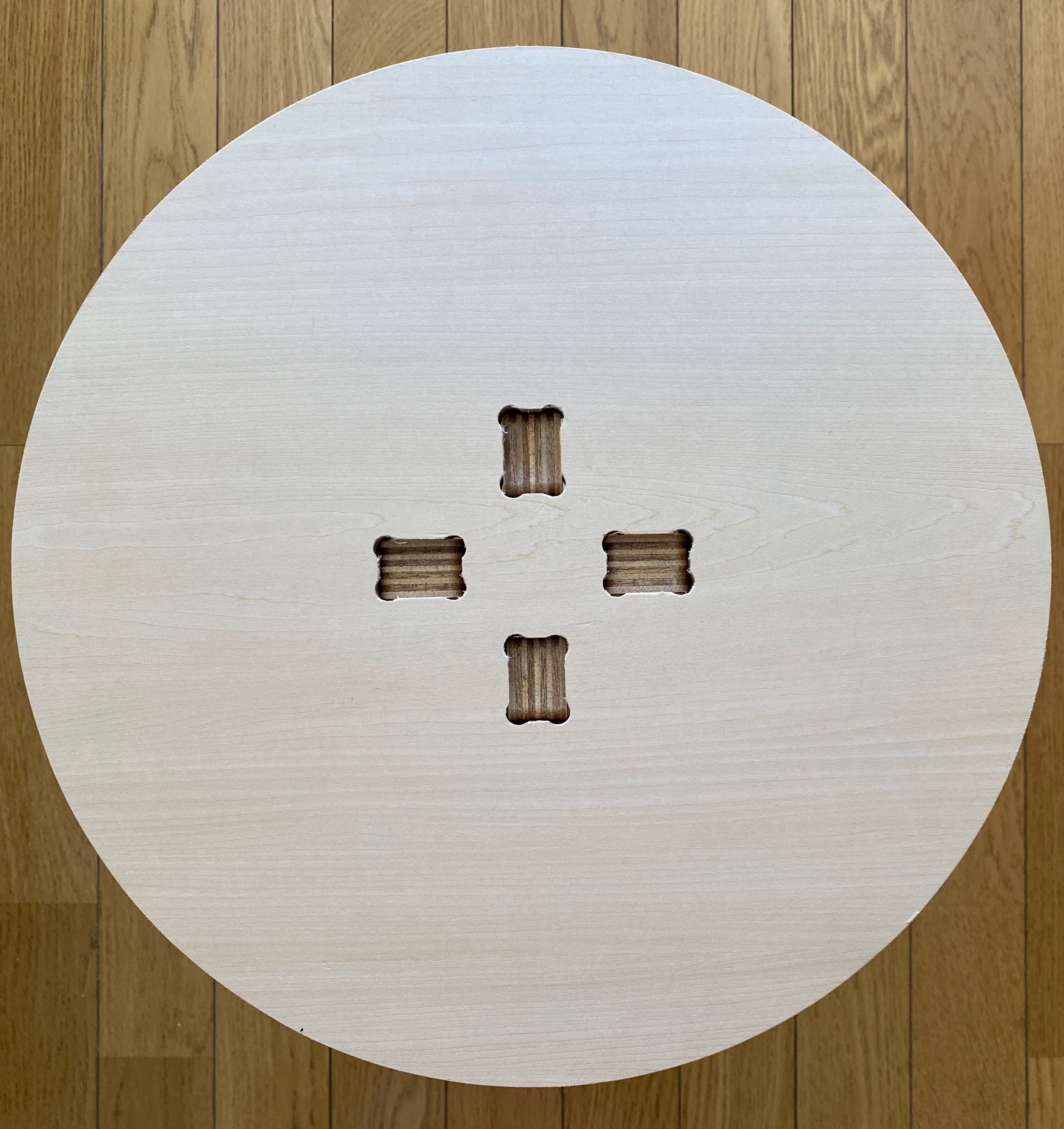
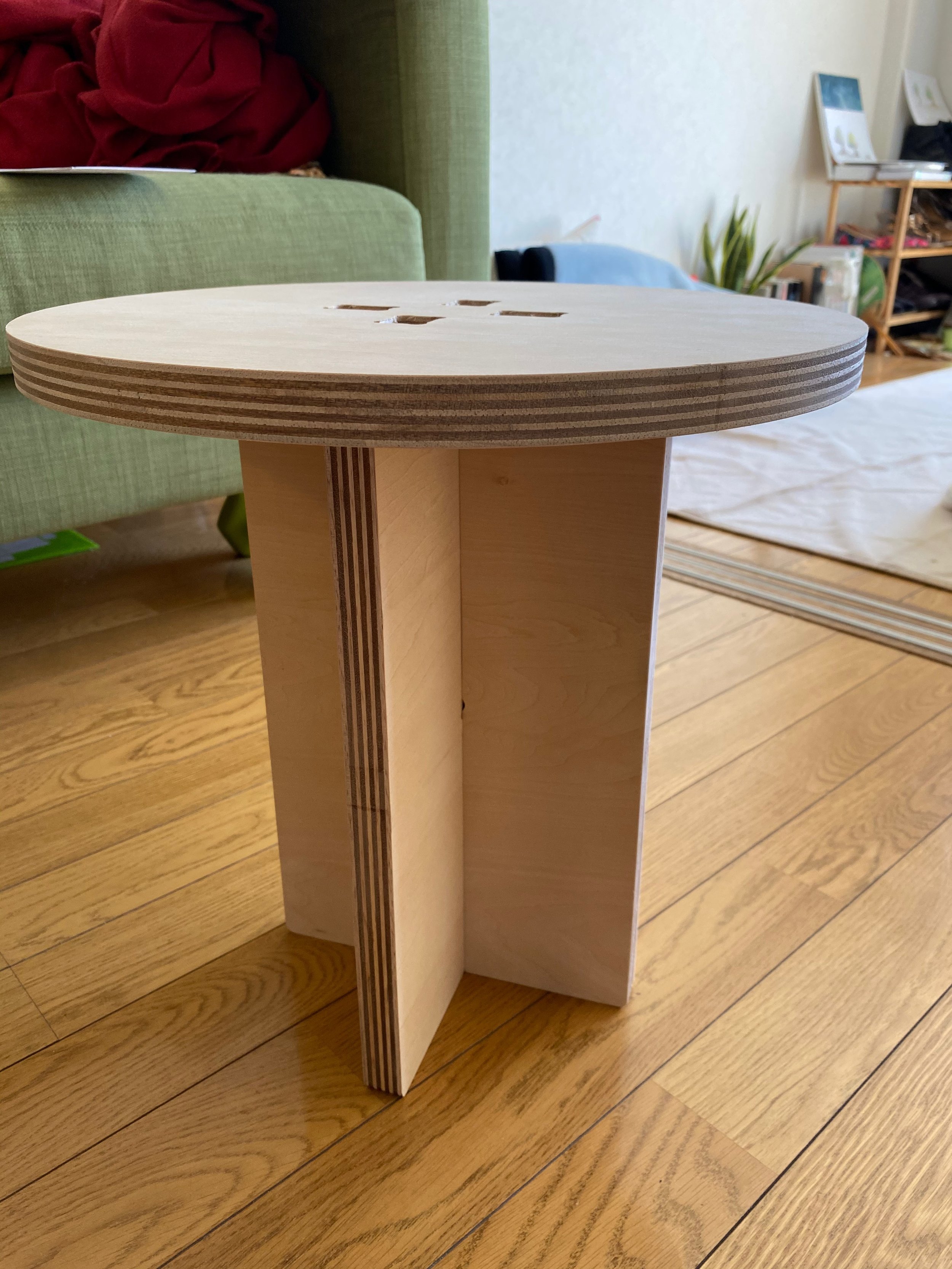
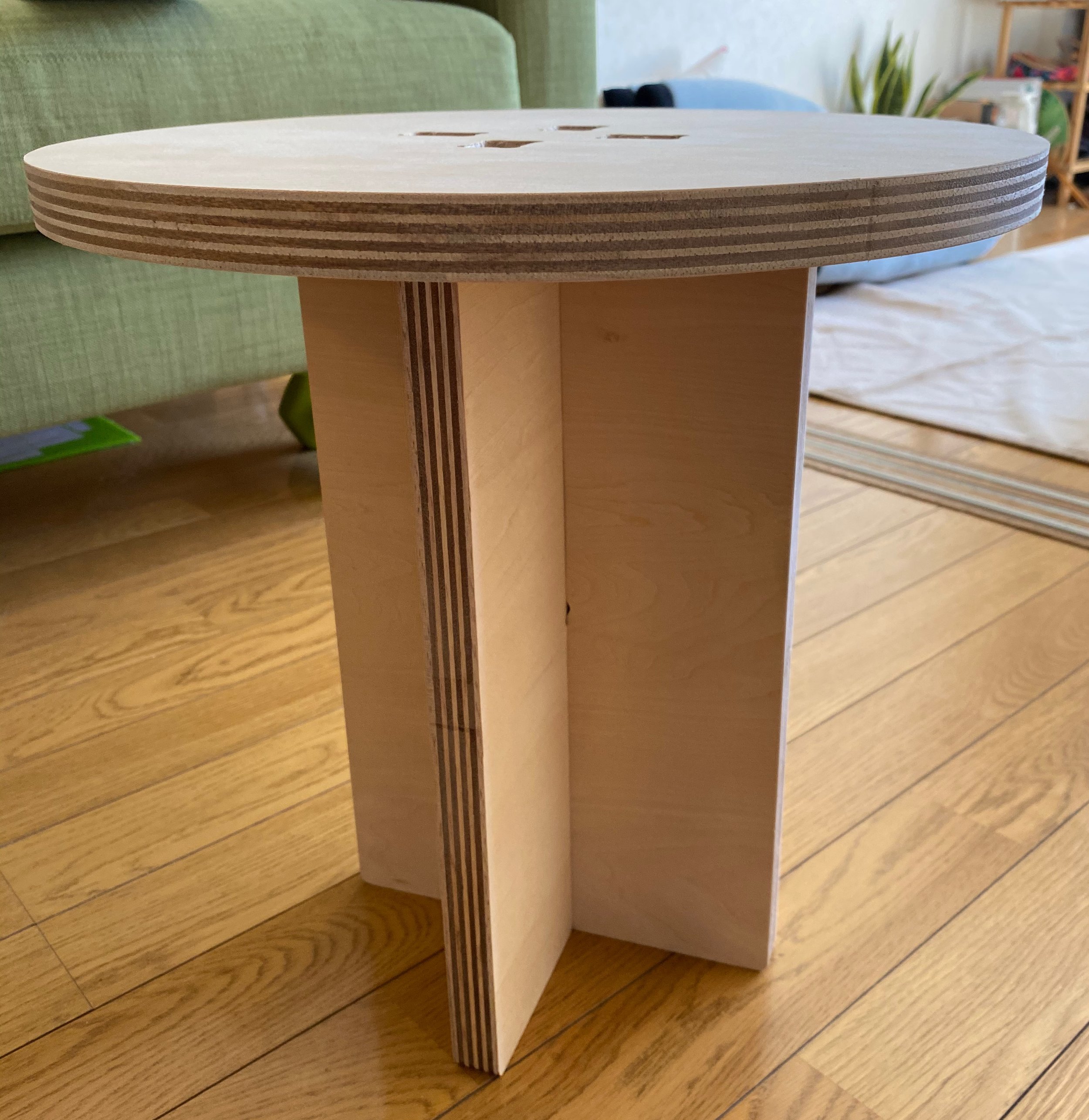
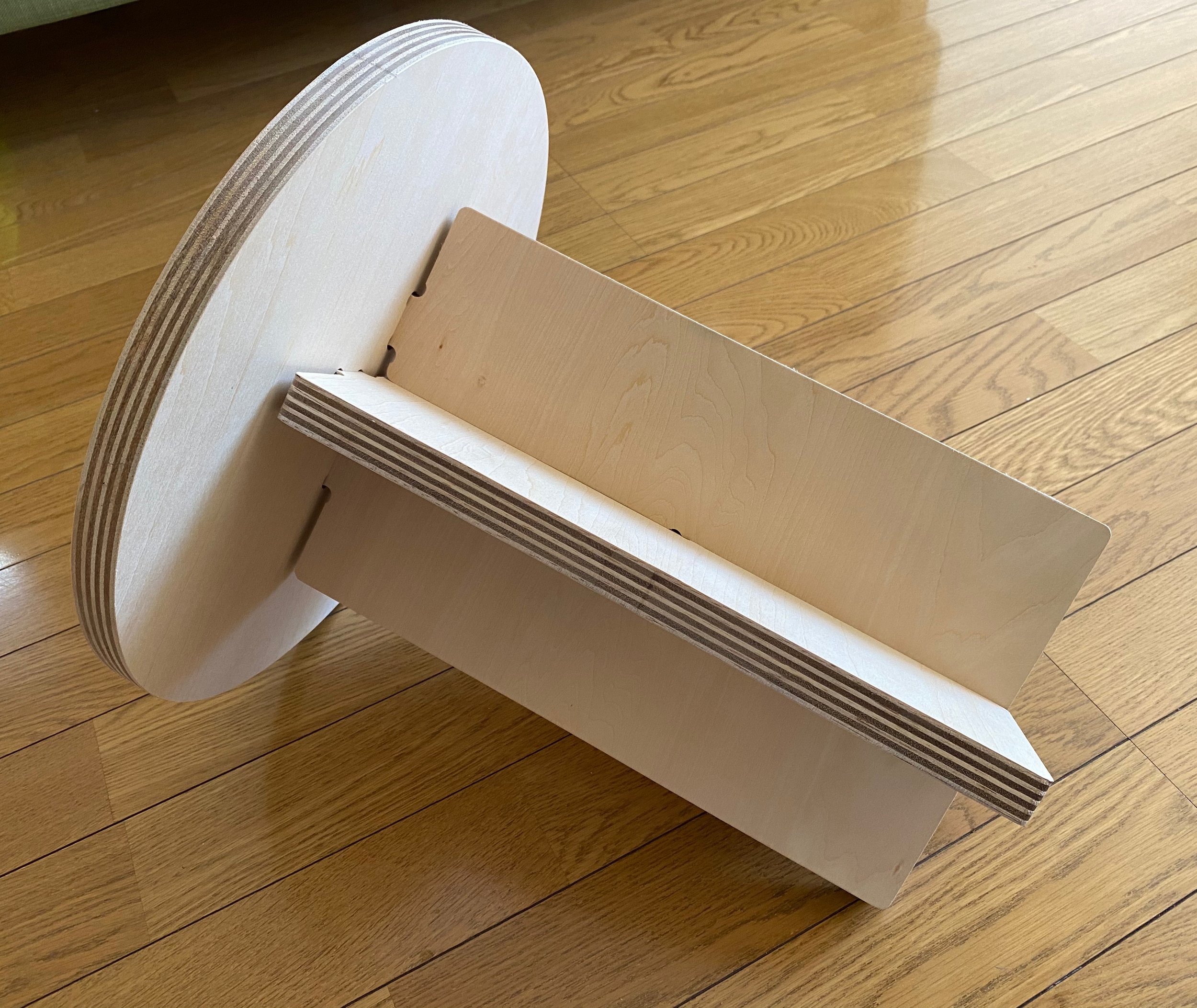
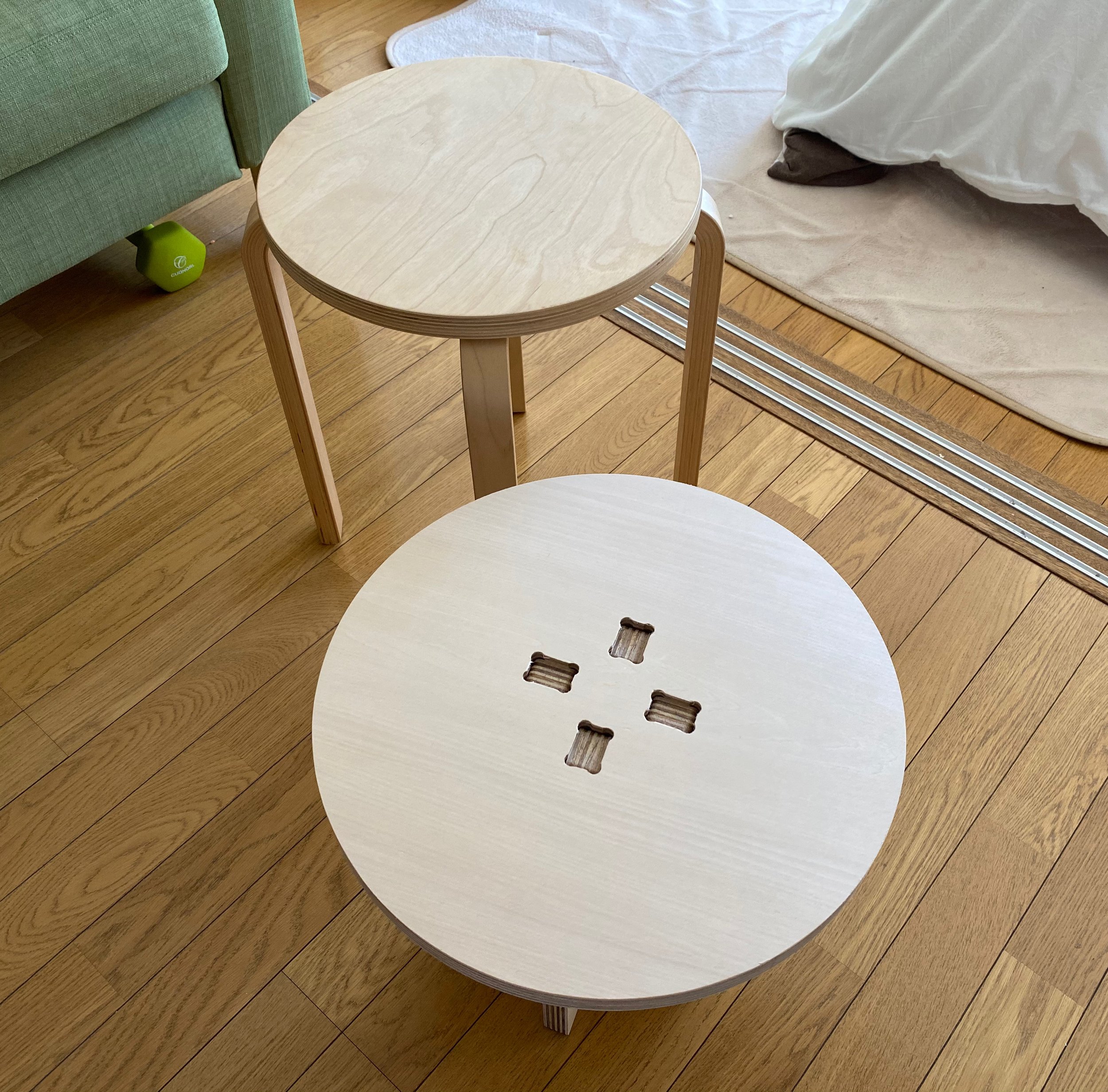
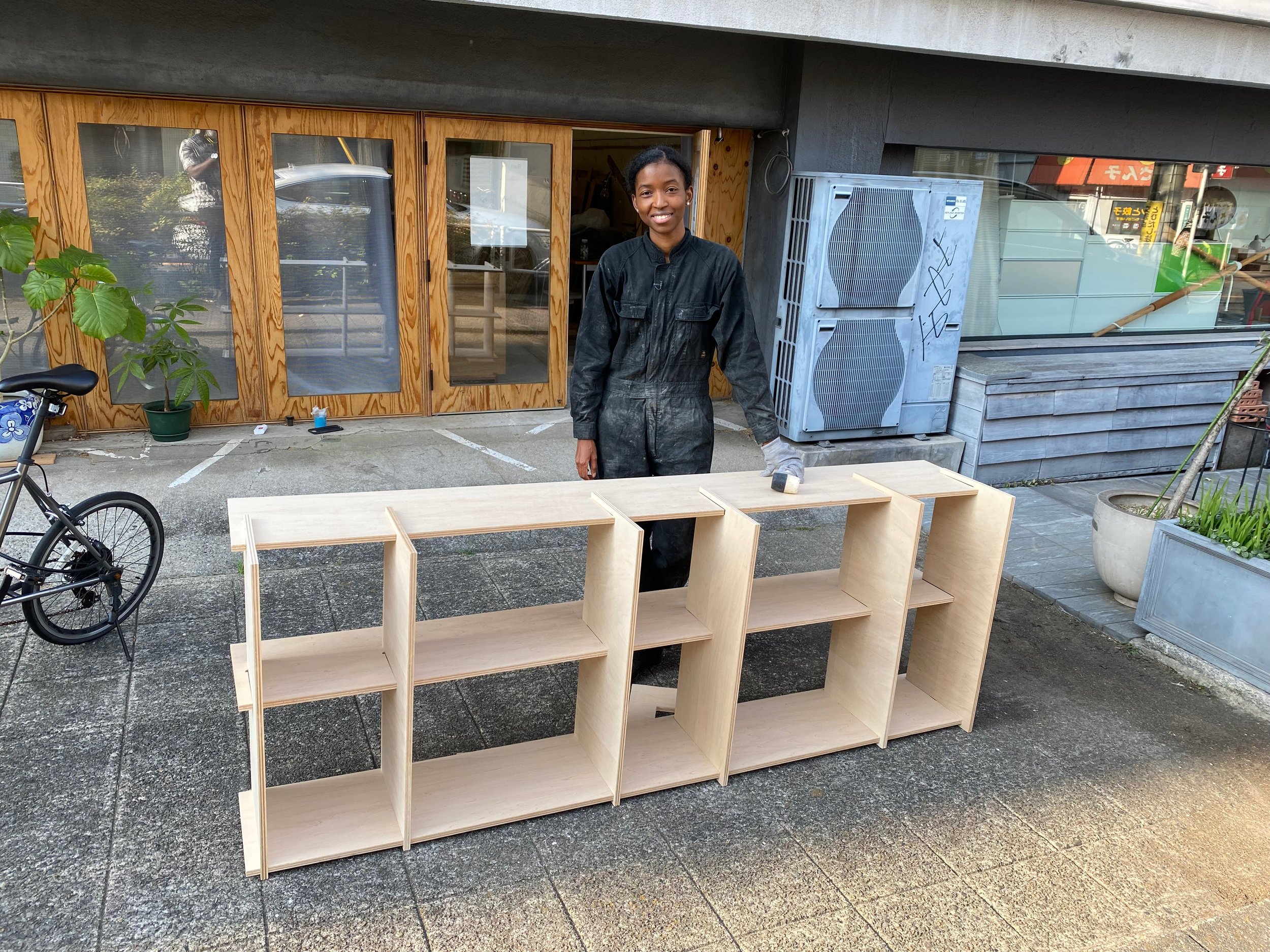
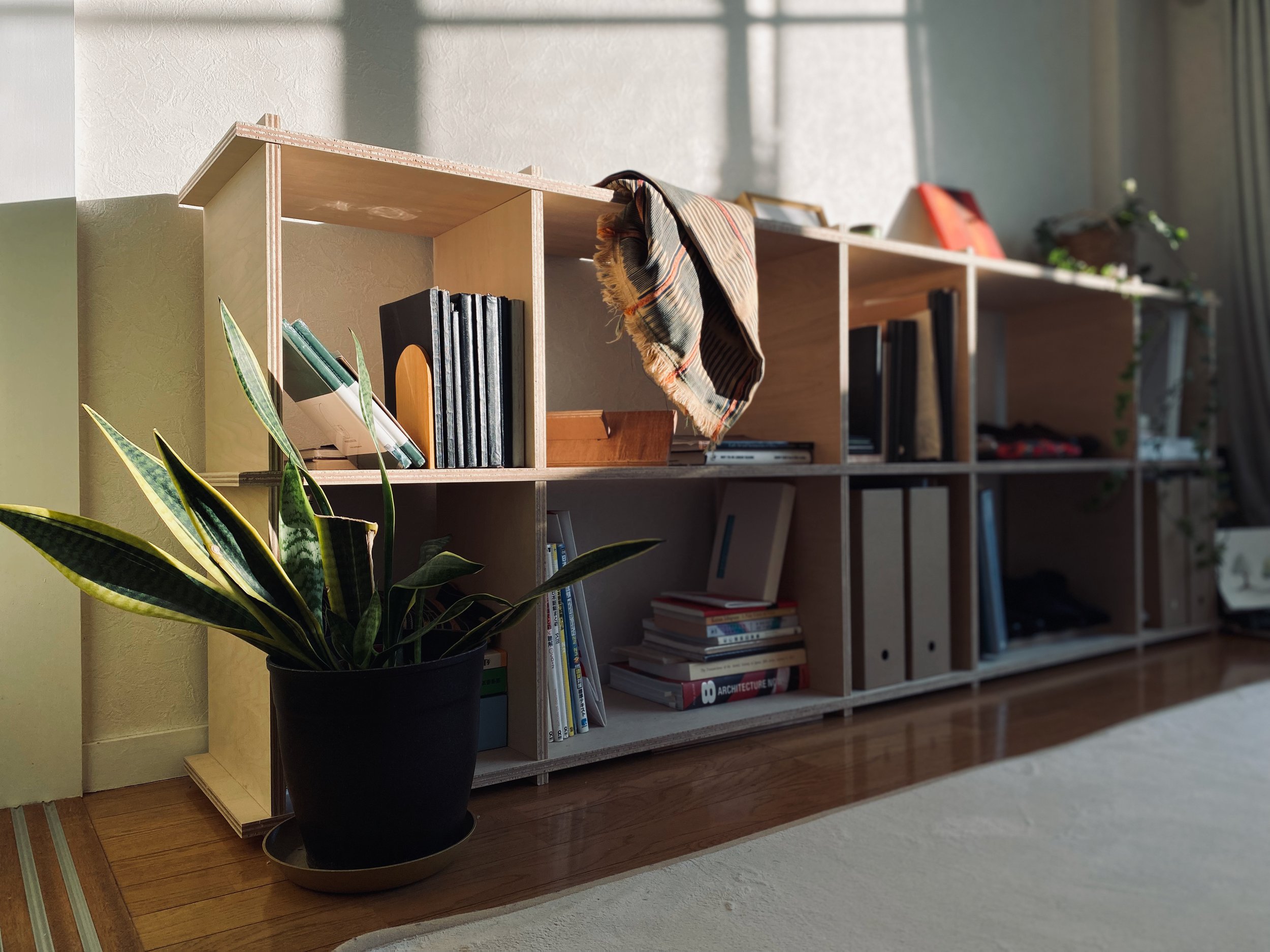
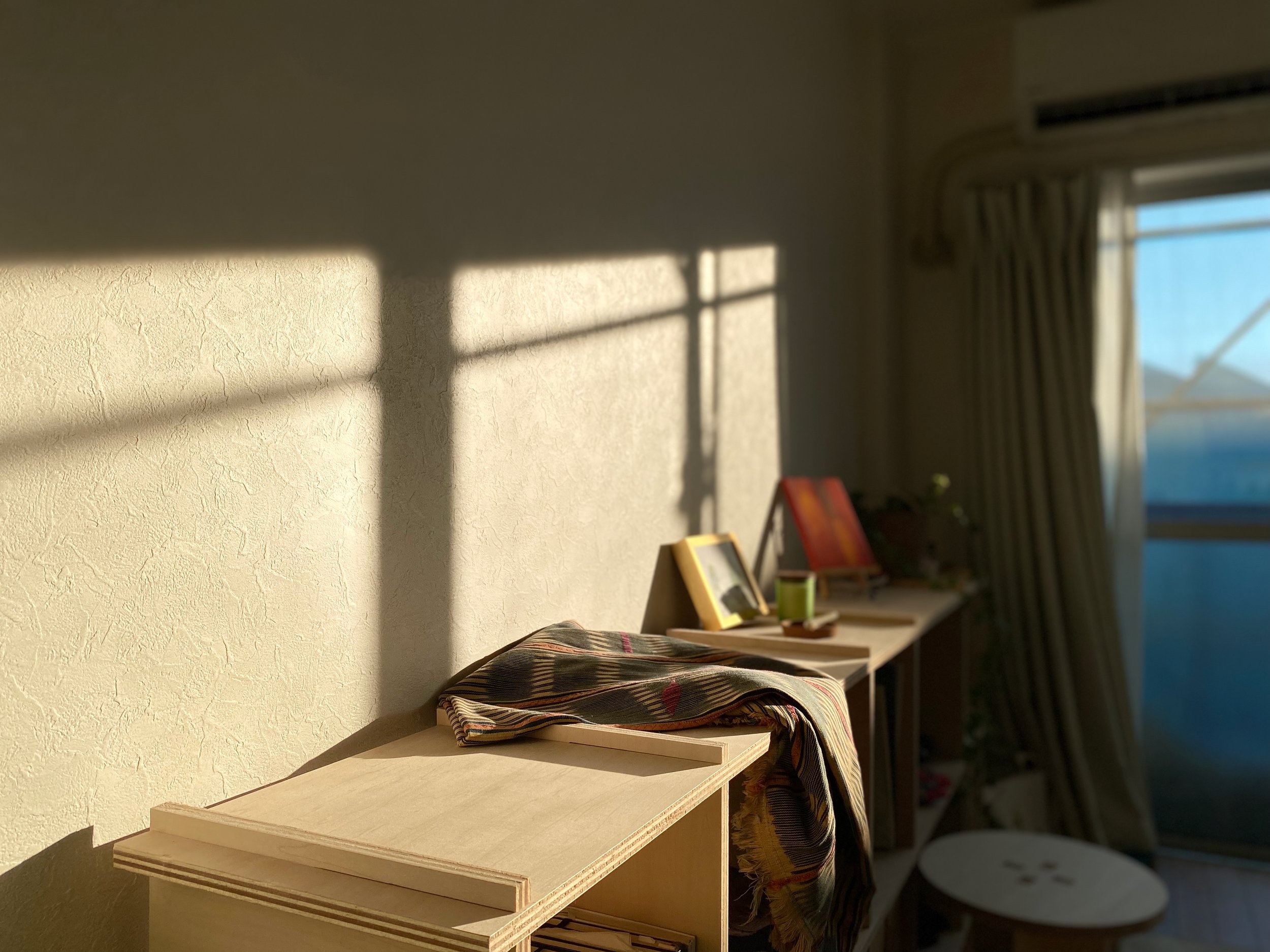
I think it would take another blog post to explain how I learned the skills I used to make the three stools and bookshelf I now have in my apartment. But I have my time at Keio University to thank for it. I also think I’d need to write a separate article to explain the process of designing each and how the space I live in dictated their outcomes. I can say, they follow the dos and don'ts of tiny living that I mentioned earlier.
Light-Coloured Wood
In this case, high-quality furniture-grade ply made from Linden wood.
A form and assembly driven by function, meant to display the technology used to make them.
Leaving the ridges on the surface, rather than making it a continuous level counter-top type, invites questions. Exposing them creates opportunities to explain how the shelf was made with slotted joinery, without nails, screws, or glue.
Dimensions
The length, height, and depth of the shelf and my stools were determined by the proportions of my own body, the size of the rooms they would be used in, and their relationship to furniture I already had in these rooms.
No backboard
For visibility of the wall behind it, making the presence of the shelf more subtle. Important in a small space. It’s more flexible without a front and a back. It has no defined direction.
Without a back, it can be used in the middle of a space, not just against a wall.
So,
Do I have a Style?
If I do have a style, it is guided by my process. A process of responding to real-world conditions.
In one case, I might measure the length of my thigh and calf to determine the diameter for the seat and height of a stool. In another case, I might measure the distance from my bed to an opposing wall, to tell me the maximum depth for my bookshelf. That is, a depth that would leave me space to walk in what I feel is a comfortable way.
Maybe it’s all not as logical as I think. I’m sure a lot of it is visceral. Tenets of modernism aside, I love wood. The fact that modernism demands that we expose materials instead of hiding them could be just a happy coincidence.
If I had a different space, in a different country, I’m sure the aesthetic would be very different from the one I’ve slowly developed here. While I am definitely not a minimalist, I’m also really uncomfortable with excess and clutter.
My style is more like a base formula. With different variables, there’ll be different results. With the combination of my tendency to respond to circumstance and to only want what’s necessary, I’d dare to hope that my style could be called appropriate.

I was born and raised in Jamaica, where my journey to becoming an architect began. I’m currently an architectural designer at Japan’s largest architectural firm.
Check out Annabell's episode on Flourish in the Foreign here.
Watch the IG Live featuring Annabell here.
Have some insight to share? Drop your comments below and let’s continue the conversation.
Found this helpful? Be sure to share with your friends!